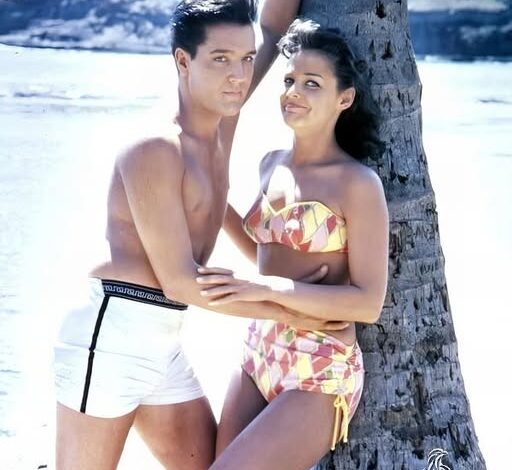
Blue Hawaii remains one of the most recognizable chapters in Elvis Presley’s Hollywood career — a colorful, music-filled success story that helped cement his image as both a rock-and-roll icon and box office phenomenon. But behind the sunny beaches, catchy songs, and effortless charisma, the film also marked a turning point that quietly frustrated Presley for years to come.
Released in 1961, Blue Hawaii became a massive commercial hit, drawing audiences eager to see Elvis at the height of his fame. The film’s combination of tropical scenery, romance, humor, and musical performances proved enormously successful, while its soundtrack — featuring classics like “Can’t Help Falling in Love” — became one of the best-selling albums of his career.
The movie’s success also established a formula that Hollywood studios, guided heavily by Elvis’s longtime manager Colonel Tom Parker, would repeatedly use throughout the 1960s. Lightweight plots, exotic settings, glamorous co-stars, and frequent musical numbers became the blueprint for many of Presley’s later films because they were predictable, marketable, and highly profitable.
What made Blue Hawaii especially notable was its relaxed approach to music within the storyline. Presley’s character, Chad Gates, was not portrayed as a professional entertainer, yet songs appeared constantly and without explanation — whether on the beach, on a boat, or during casual conversations. Audiences embraced the carefree style, helping turn the film into a cultural phenomenon.
But behind the scenes, the formula reportedly carried a quieter emotional cost for Presley himself. While the movies made money, they also increasingly limited his opportunities as an actor. Rare production details and accounts from those close to him suggest Elvis sometimes felt creatively trapped by repetitive scripts and roles that prioritized soundtrack sales over meaningful storytelling.
Over time, critics began dismissing many of the films as interchangeable musicals, even as fans continued supporting them at the box office. Presley, who had once hoped to be taken seriously in Hollywood, reportedly grew frustrated with the assembly-line nature of the productions and the lack of artistic challenge.
Today, Blue Hawaii is remembered both as one of Elvis’s most beloved films and as the moment that solidified a formula that would dominate much of his movie career. For fans, the film still radiates charm, nostalgia, and star power. But looking back, it also offers a glimpse into the tension between commercial success and creative fulfillment — a conflict that followed Elvis long after the cameras stopped rolling.