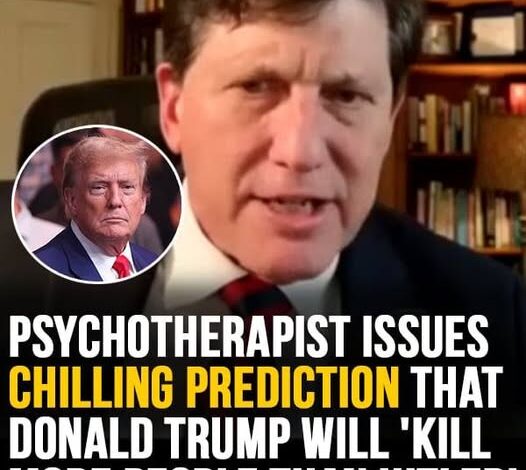
A controversial warning from psychotherapist John Gartner has reignited debate over the mental fitness of political leaders and the role mental health professionals should play in public discourse.
Gartner, founder of the organization “Duty to Warn,” has argued publicly that former President Donald Trump’s behavior reflects what he describes as escalating psychological instability and cognitive decline. In recent interviews and commentary, Gartner claimed Trump’s conduct and rhetoric could pose a serious threat if he were to return to the presidency.
Among the most controversial aspects of Gartner’s remarks was his assertion that Trump could become historically dangerous on a global scale — comments that immediately drew backlash from critics across the political spectrum.
Gartner points to Trump’s public speeches, social media posts, and repeated comparisons to historic and religious figures as evidence of what he believes are signs of grandiosity and detachment from reality. He argues these behaviors go beyond political showmanship and raise concerns about judgment, decision-making, and fitness for office.
The comments have sharply divided the mental health community.
Supporters of Gartner’s position argue mental health experts have an ethical responsibility to speak out when they believe a public figure may pose a danger to society. They contend that concerns about leadership, especially involving nuclear powers and global stability, cannot be ignored simply because the individual holds political office.
Critics, however, argue that diagnosing public figures without a direct clinical evaluation violates professional ethics and risks politicizing psychiatry. Many point to the “Goldwater Rule,” an ethical guideline established by the American Psychiatric Association that discourages mental health professionals from publicly diagnosing individuals they have not personally examined.
Opponents also warn that using psychiatric language in political battles could undermine public trust in mental health professions and turn clinical assessments into partisan weapons.
The controversy has fueled broader conversations about presidential fitness, leadership, and the responsibilities of both voters and experts in assessing candidates for high office.
While opinions remain deeply divided, the debate underscores growing national anxiety about the intersection of political power, public behavior, and mental health in an increasingly polarized era.