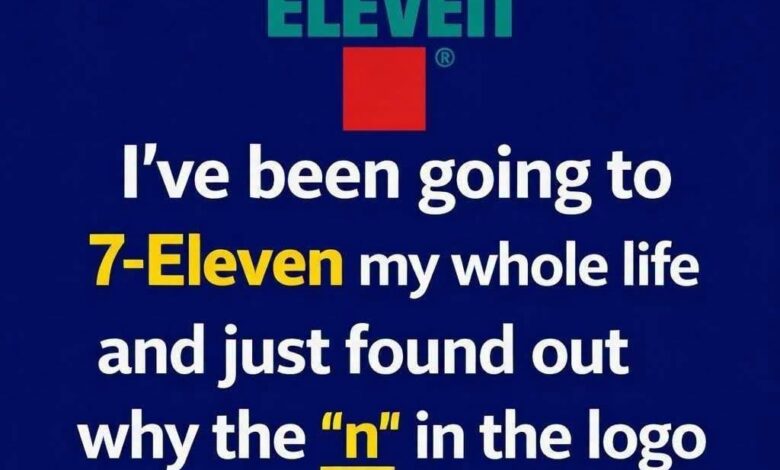
The 7-Eleven logo is one of the most recognizable brand symbols in the world, with its bold red, orange, and green colors appearing on stores across many countries. At first glance, the design looks simple and familiar, but a closer look reveals a subtle detail that often goes unnoticed: the final letter in “Eleven” is lowercase.
This small typographic choice has sparked curiosity over the years, with some assuming it was a mistake. In reality, it was an intentional design decision aimed at improving the logo’s overall visual feel. Early versions of the branding reportedly used all capital letters, but designers felt the look was too rigid. The shift to a lowercase “n” softened the wordmark and made it appear more approachable and balanced.
The history behind the logo also reflects the company’s evolution. 7-Eleven began in 1927 in Dallas, Texas, originally operating under the name Tote’m Stores, offering basic groceries in a single convenient location. In 1946, the brand was renamed 7-Eleven to highlight its then-unusual operating hours of 7 a.m. to 11 p.m., emphasizing convenience as its core identity.
Over time, the brand expanded and eventually adopted 24-hour operations in many locations, but the original name remained due to its strong recognition. Today, the logo’s consistent design—combined with its subtle typographic detail—has helped make 7-Eleven a globally familiar symbol of convenience, accessibility, and everyday reliability.