Experts Warn Nuclear War Could Devastate Planet — Only a Few Countries May Remain Livable

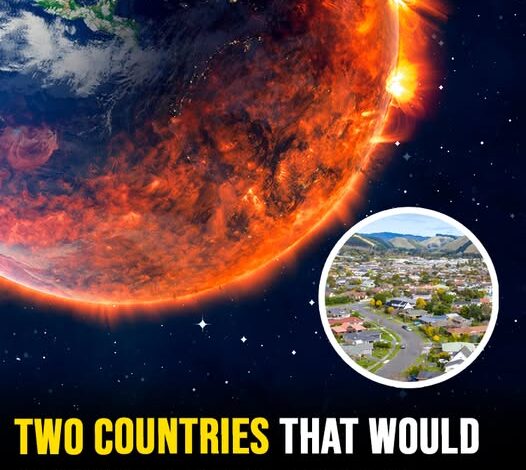
Rising tensions in the Middle East have renewed global fears about the possibility of nuclear conflict following military strikes by the United States and Israel on Iran. The attack reportedly killed Iran’s Supreme Leader, Ali Khamenei, prompting retaliatory strikes by Tehran against U.S. military facilities in the region.
Several countries across the Middle East — including Jordan, Oman, Bahrain, Kuwait, and Qatar — have reported missile or drone activity as the conflict spreads. Meanwhile, Israel has continued military operations in neighboring Lebanon.
With major powers including Russia, China, and North Korea condemning the attacks, concerns are growing that the crisis could escalate into a broader global confrontation.
The Threat of Nuclear Escalation
Experts warn that a nuclear conflict would have consequences far beyond the immediate destruction of targeted cities. The environmental aftermath — often referred to as a “nuclear winter” — could disrupt global agriculture and cause mass famine.
Speaking on the Diary of a CEO podcast, journalist and author Annie Jacobsen, who wrote the book Nuclear War: A Scenario, described a devastating potential outcome if nuclear weapons were widely used.
Jacobsen said billions of people could die in a short period due to blast effects, radiation, and the collapse of food systems. She cited research with climate scientist Brian Toon suggesting that smoke and debris from nuclear explosions could block sunlight and plunge much of the planet into a prolonged period of cold.
“Most of the world, certainly the mid-latitudes, would be covered in sheets of ice,” Jacobsen said, adding that regions such as the U.S. Midwest and Eastern Europe could remain frozen for years.
Countries Most Likely to Sustain Agriculture
According to the analysis discussed by Jacobsen and Toon, only a handful of countries might remain capable of sustaining agriculture during such a climate crisis.
The two countries considered most likely to remain viable are:
- New Zealand
- Australia
Their geographic isolation, lower population density, and relatively resilient agricultural systems could make them better positioned to withstand the global disruption.
Other Potentially Safer Locations
While not guaranteed safe, several other nations are sometimes mentioned as potentially more resilient due to geography or limited involvement in nuclear arsenals. These include:
- Switzerland
- Iceland
- South Africa
- Tuvalu
- Chile
Many of these locations have relatively stable food systems, geographic isolation, or lower strategic military value compared with major global powers.
Global Anxiety Continues to Grow
Although a full-scale nuclear conflict remains unlikely, analysts say the renewed geopolitical tensions have revived discussions about preparedness and the long-term consequences of nuclear weapons.
Experts emphasize that the true cost of nuclear war would not only be measured in immediate casualties but also in the lasting environmental damage that could affect the entire planet for years.
For now, global leaders continue diplomatic efforts to prevent further escalation as concerns about international stability grow.