An itchy rash keeps flaring up under my breasts in winter, but my doctor isn’t available right now. What can I do today?

Why Winter Can Trigger Painful Under-Breast Rashes—and How to Treat Them
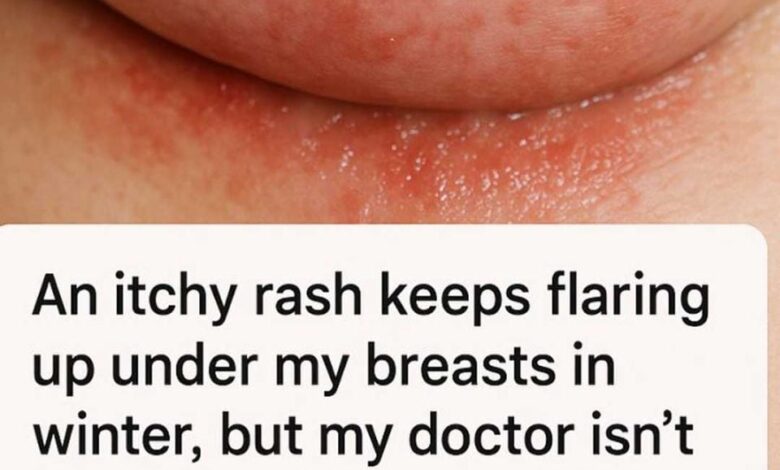
Painful rashes beneath the breasts often worsen in winter, and the culprit is frequently intertrigo—a condition that develops where heat, moisture, and friction get trapped in skin folds.
Colder months create ideal conditions for irritation. Heavy clothing, layered fabrics, and indoor heating can leave skin damp with sweat but without enough airflow to dry properly. The result is inflammation that may appear red, itchy, and sometimes raw or tender.
Simple at-home care can make a significant difference. Gently washing the area with a mild cleanser, thoroughly drying the skin, and applying barrier ointments such as zinc oxide or petrolatum can help protect and soothe irritated tissue. If a yeast component is involved, over-the-counter antifungal creams may also be effective.
Prevention plays a key role. Breathable bras, moisture-wicking fabrics, and avoiding tight or non-ventilated layers can reduce sweat buildup. Using talc-free powders and taking breaks to cool and dry the skin can also help manage symptoms.
However, certain warning signs require medical attention. Increasing pain, spreading redness, fever, or pus may indicate infection. If symptoms don’t improve after about a week of home treatment, it’s important to consult a healthcare provider. Bringing notes or photos of changes—and a list of products already tried—can help guide more effective treatment.
With the right care and adjustments, most cases can be managed successfully, even during the harshest winter months.