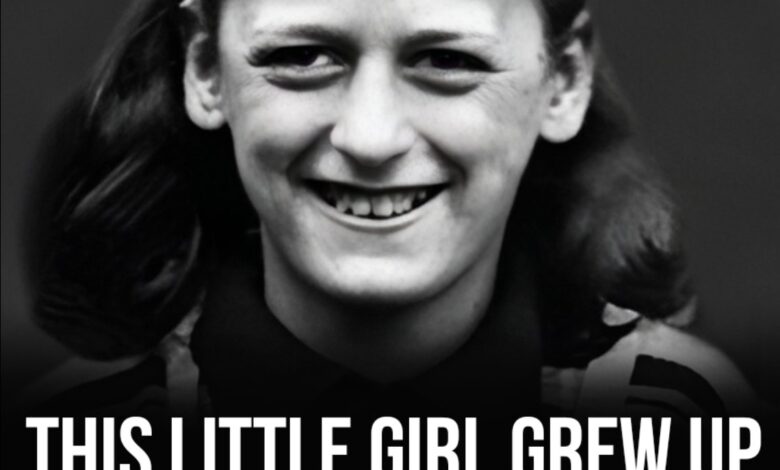
At first glance, Myra Hindley appeared to be an ordinary child growing up in post-war England. Decades later, she would become one of the most infamous figures in British criminal history — a name still studied in true crime, psychology, and legal analysis.
Early Life in Post-War Manchester
Hindley was born July 23, 1942, in Gorton, Manchester, during World War II. Her father worked as an aircraft fitter and later struggled with alcoholism and depression after returning from service. Her mother held various manual jobs, and the family lived in modest, crowded housing typical of the period.
Accounts of her childhood describe instability and frequent domestic conflict. At times, she stayed with her grandmother to escape tensions at home. Criminologists often examine such early environmental stressors when studying violent offenders, though experts stress that hardship alone does not predict criminal behavior.
Teenage Years and Personal Loss
As a teenager, Hindley experienced the accidental drowning of a close friend, an event later reported to have affected her deeply. She briefly turned toward religion and appeared to pursue a conventional young adult life, holding clerical jobs and socializing normally.
However, acquaintances would later say her personality began to shift during these years.
Meeting Ian Brady
A decisive turning point came when Hindley met Ian Brady at a chemical company in Manchester. Their relationship became central to what would later be known as the Moors Murders.
Prosecutors later argued that Brady introduced extremist ideas and violent fantasies into the relationship. Over time, their shared fixation escalated into real-world crimes that shocked the United Kingdom.
The Moors Murders
Between 1963 and 1965, Hindley and Brady abducted and murdered five children and teenagers, burying several victims on Saddleworth Moor.
Confirmed victims:
- Pauline Reade (16)
- John Kilbride (12)
- Keith Bennett (12)
- Lesley Ann Downey (10)
- Edward Evans (17)
The case broke open after Edward Evans’ murder was witnessed by a relative, who alerted police. Both suspects were arrested in October 1965.
Despite extensive searches over decades, Keith Bennett’s body has never been recovered — a lasting source of anguish for his family.
Trial and Life Imprisonment
In 1966, the pair stood trial in one of Britain’s most closely watched criminal proceedings. Public outrage was intense, and courthouse security was heightened.
Both were convicted and sentenced to life imprisonment. Brady later admitted further details and showed no remorse. Hindley repeatedly sought parole, claiming rehabilitation, but she was never released.
Hindley died in prison in 2002 from bronchial pneumonia. Brady died in 2017.
Lasting Impact
The Moors Murders profoundly influenced UK policing, media ethics, and public discussion of violent crime. Hindley’s mugshot became one of the most recognizable criminal images in British history.
The case continues to be studied in:
- forensic psychology
- criminal profiling
- investigative procedure
- victim impact research
While her early life appeared outwardly ordinary, the crimes committed by Hindley and Brady left an enduring scar on British society — and remain a stark example of the devastating consequences of extreme violence.