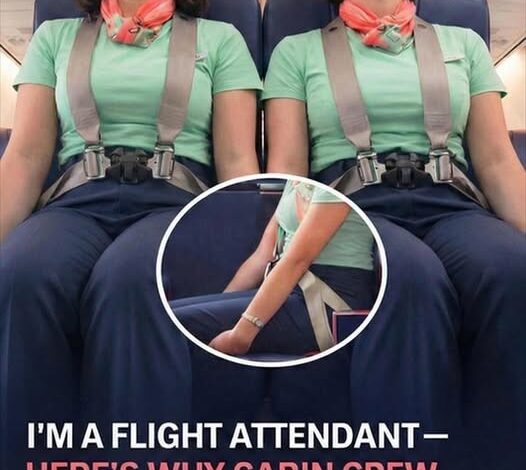
Why Flight Attendants Sit on Their Hands During Takeoff and Landing
If you’ve ever glanced at the cabin crew during takeoff or landing, you may have noticed something unusual: flight attendants sitting upright, backs straight, feet flat on the floor — with their hands placed palms-up under their thighs.
It may look uncomfortable. It may even seem random.
It’s neither.
This posture is a deliberate safety technique used during the most critical phases of flight.
The Most Critical Moments of a Flight
According to global aviation safety data from the International Air Transport Association and guidance from the Federal Aviation Administration, the majority of aviation incidents occur during takeoff and landing.
These phases involve rapid altitude and speed changes, complex cockpit procedures, and limited reaction time. Because the aircraft is close to the ground, pilots and crew must be prepared for immediate action if something unexpected occurs.
For that reason, cabin crew adopt what is known as the brace position during these moments.
Why the Hands Go Under the Thighs
Placing hands palms-up under the thighs serves several important safety purposes:
1. Prevents Flailing in an Impact
In the event of a sudden stop or hard landing, unsecured arms can instinctively fly upward, increasing the risk of injury. Securing the hands under the thighs limits uncontrolled movement.
2. Reduces Risk of Wrist and Arm Injuries
By stabilizing their arms, crew members lower the chance of fractures, dislocations, or sprains during an impact.
3. Maintains Proper Posture
The upright, aligned seating position helps protect the spine and keeps the body braced to absorb force more safely.
4. Keeps Crew Mentally Prepared
This position is also psychological. It signals a shift into high alert mode. Flight attendants remain silent, focused, and ready to act instantly if evacuation procedures are needed.
Ready to Respond in Seconds
Unlike passengers, cabin crew are not simply riding through takeoff and landing — they are actively assessing the cabin environment. They conduct what’s known in aviation as a “silent review,” mentally rehearsing emergency commands and exit responsibilities.
If an evacuation becomes necessary, flight attendants must move immediately — often within seconds — to direct passengers, deploy slides, and manage chaos calmly.
A Position Designed for Safety
So while sitting on their hands may look awkward, it’s actually a carefully engineered safety protocol rooted in aviation training and impact survival science.
It’s not about comfort.
It’s about control, preparedness, and being ready to protect everyone on board when it matters most.