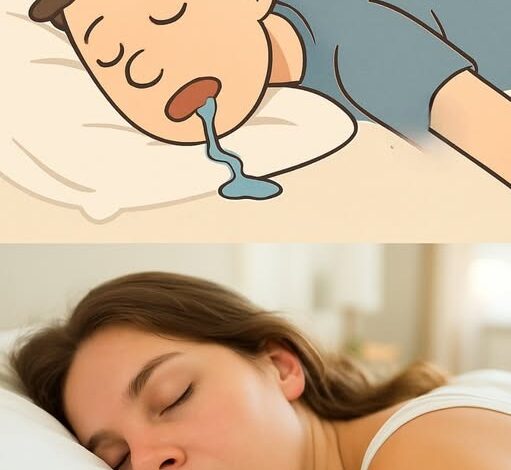
Waking up to a damp pillow may feel embarrassing, but sleep-related drooling is both common and typically harmless, according to sleep experts. Rather than signaling a medical problem, it usually reflects normal changes in the body during different stages of sleep.
Drooling occurs when the muscles responsible for swallowing and keeping the mouth closed relax more than usual. This relaxation is most pronounced during deeper sleep—particularly REM sleep—when overall muscle activity decreases. As the jaw loosens, the mouth may fall open, allowing saliva to build up instead of being swallowed.
With swallowing slowed and the mouth slightly open, excess saliva can escape from the lips, leading to noticeable drooling by morning.
Sleep position also plays a major role. People who sleep on their side or stomach are more likely to drool because gravity makes it easier for saliva to leave the mouth. Sleeping on the back may reduce drooling for some, though it’s not a comfortable option for everyone.
In most cases, experts say, occasional drooling during sleep is a normal bodily function—not a cause for concern.