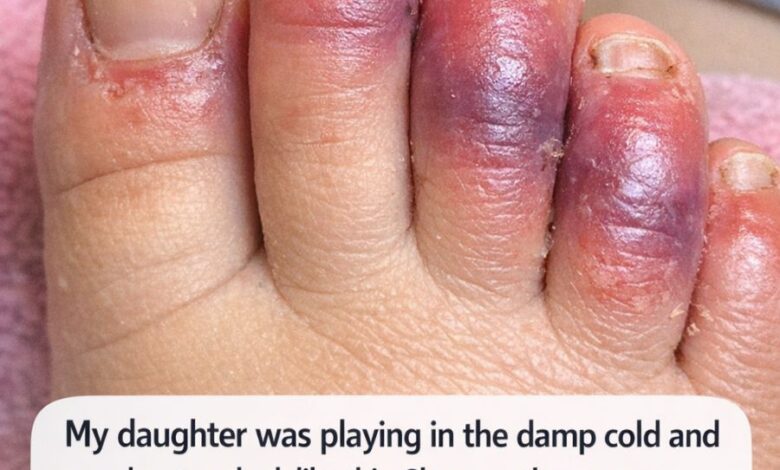
What many people assume is frostbite can often turn out to be chilblains—a common but uncomfortable reaction to cold, damp weather followed by rapid warming. The condition occurs when tiny blood vessels in the skin overreact, leading to inflammation and leakage beneath the surface.
Symptoms typically appear within hours of exposure and include red, swollen toes or fingers that may burn or itch. Children and teenagers are particularly at risk, as their circulation is still developing and they’re more likely to ignore early discomfort while playing বাইরে in the cold.
Health experts recommend gentle care at home. Affected areas should be warmed gradually using dry layers and comfortably warm (not hot) indoor temperatures. Direct heat sources, hot water, or rubbing the skin can make symptoms worse. Keeping feet dry and encouraging light movement can help restore healthy circulation.
However, warning signs such as blisters, increasing pain, spreading redness, or signs of infection require prompt medical attention. Doctors can confirm whether it is chilblains or another condition, such as frostbite or Raynaud’s phenomenon, and recommend appropriate treatment.
With proper care and prevention—like wearing warm, dry clothing and taking regular breaks from the cold—most cases resolve fully, allowing children to safely return to winter activities.