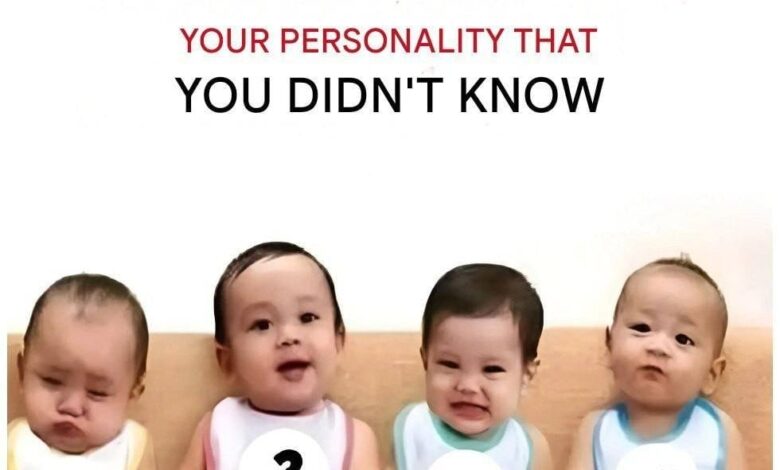
When people are shown four babies and asked, “Which one is a girl?”, the exercise often says less about accuracy and more about instinct. Rather than carefully analyzing the image, most people make quick decisions based on subtle emotional cues, unconscious assumptions, and the details that immediately draw their attention. Psychologists have long noted that snap judgments can reflect personal perceptions, values, and emotional tendencies more than objective reality.
In this personality-style interpretation, choosing baby number one is associated with empathy, protectiveness, and emotional sensitivity. People drawn to that choice are often described as attentive listeners who naturally notice vulnerability and respond with care. They may be highly intuitive in social situations, picking up on emotions and unspoken tension before others recognize it themselves.
Supporters of these exercises say the appeal lies not in scientific accuracy, but in the way they encourage self-reflection. The choices people make can act as mirrors for the qualities they value most — whether that is gentleness, confidence, calmness, or curiosity — offering insight into how they connect with and support those around them.