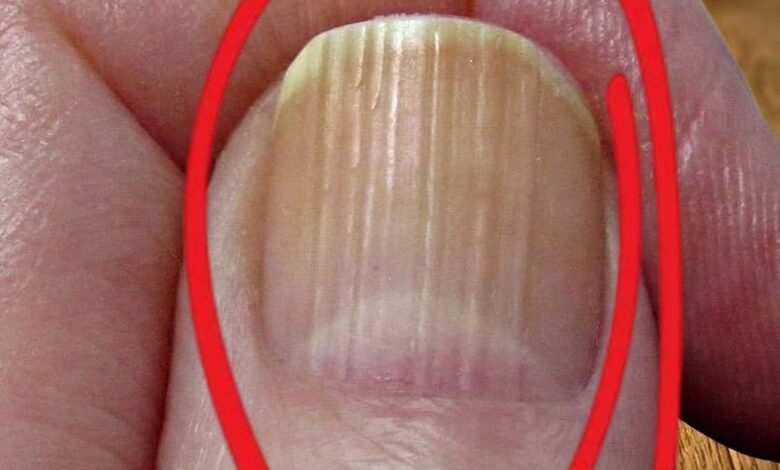
Vertical ridges on the nails are a common change many people notice over time, and in most cases they are considered a normal part of aging rather than a sign of disease. Dermatology experts explain that these lines typically develop gradually as the nail’s growth process slows or becomes less uniform with age.
Nails form in the nail matrix, a layer of tissue beneath the cuticle where new cells are produced. As these cells are pushed outward, variations in growth speed or minor disruptions in the process can create faint vertical lines that become more visible on the nail surface.
Nutrition can play a supporting role in overall nail health. Adequate intake of protein is important because nails are primarily made of keratin, a structural protein that contributes to strength. Nutrients such as biotin, iron, and zinc are also involved in normal cell growth and repair, and deficiencies in these areas can sometimes be associated with changes in nail texture or fragility.
Hydration is another factor that can influence nail appearance. When the body is dehydrated, nails may become more brittle or dry, which can make existing ridges appear more noticeable.
Health professionals emphasize, however, that vertical nail ridges are usually harmless and not directly linked to serious medical conditions. Sudden changes in nail color, thickness, or the appearance of deep grooves or horizontal lines are more likely to warrant medical attention.
In most cases, maintaining a balanced diet, staying hydrated, and practicing general nail care can support healthier nail growth over time, but subtle vertical ridging alone is typically considered a normal variation rather than a warning sign.