Pizza Hut brings back its old-school restaurant features as nostalgic customers are thrilled

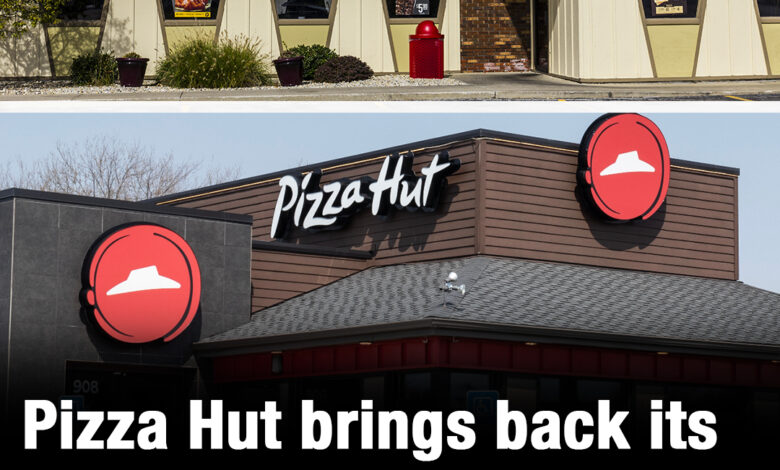
The first impression is almost disorienting: a glowing red roof, a humming Pac-Man cabinet in the corner, and families actually talking instead of scrolling. In an era when many restaurant chains have shifted toward minimalist design and digital ordering, a growing number of retro-inspired spaces are deliberately moving in the opposite direction.
At the center of this movement is a series of restaurant revivals tied to Pizza Hut, where classic design elements—red-roof architecture, stained-glass lighting, deep booth seating, salad bars, and arcade machines—have been restored to recreate the dining experience of past decades. The result is drawing customers willing to travel long distances simply to sit inside what feels like a preserved snapshot of the late 1980s and early 1990s.
For those behind the restorations, including restaurateur Tim Sparks, the effort is described less as nostalgia and more as reconstruction of an experience that has largely disappeared from modern dining. The goal, according to supporters, is to reintroduce a slower, more communal version of eating out—one where meals are not rushed, screens are put away, and conversation takes center stage.
Customers describe the atmosphere as immersive: children discovering arcade games like Pac-Man for the first time, couples revisiting familiar booth seating from earlier decades, and older patrons recognizing details that mirror restaurants from their youth. Even small touches—red plastic cups, warm lighting, and retro décor—contribute to the sense that time has been temporarily rolled back.
While not every element of the original menus or formats has returned, the experience itself has become the main attraction. In a dining landscape increasingly defined by delivery apps and automated kiosks, these retro-style locations are emerging as unlikely cultural spaces—part restaurant, part memory, and part experiment in what dining used to feel like.