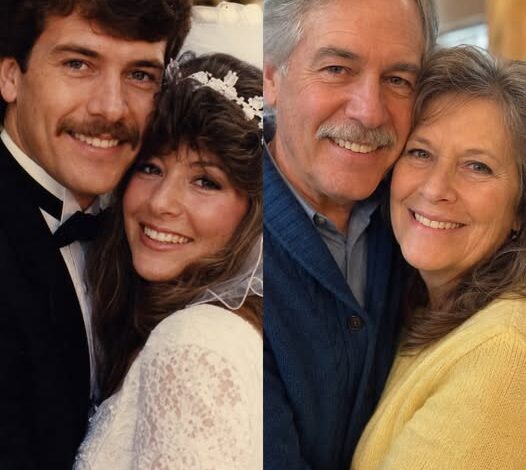
Love without truth is not mercy—it can become a form of erasure.
Richard believed he was protecting Julia by casting himself as the villain and stepping out of her life. In his mind, distance was an act of care: a way to spare her pain, to remove himself before his condition or circumstances could burden her further. But in choosing secrecy, he also removed her agency from the story they shared.
What was lost wasn’t only time, but participation. Julia was denied the chance to stand beside him in the years that followed, to understand the full truth of his absence, and to decide for herself what love looked like in the face of it. Instead, she was left to build a narrative around a version of him that was incomplete.
If there is a lesson embedded in his choice, it may be a difficult one: trust the person you have built a life with enough to let them witness even the breaking points. Love, at its most honest, includes the possibility that someone may choose to stay—not out of illusion, but out of clarity.
For Julia, the aftermath is more complicated than simple grief. It requires mourning not one man, but two: the husband who loved her deeply enough to disappear, and the man who made that disappearance a decision rather than a shared truth.
Her path forward is not about excusing what happened, but about reclaiming authorship of her own life again. That means separating memory from mythology, grief from guilt, and presence from absence. It means letting the past exist without allowing it to occupy every corner of the present.
In time, what remains is not only what was taken, but what still belongs to her: the right to continue living a life that is fully her own, no longer shaped by the silence someone else chose on her behalf.