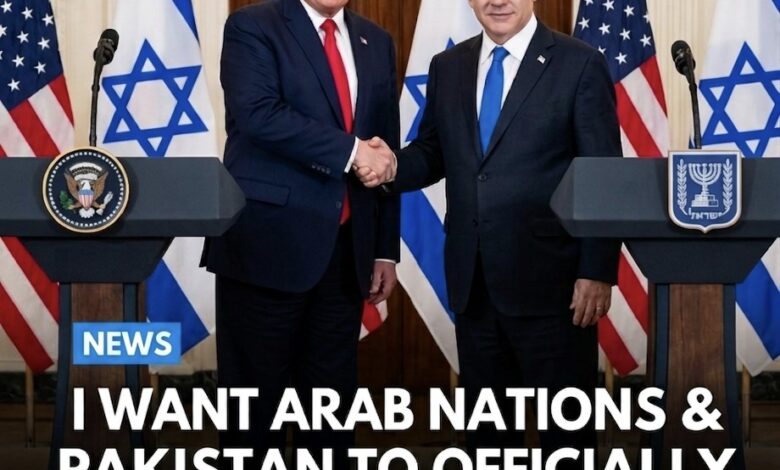
Donald Trump is advancing a renewed Middle East strategy focused on expanding diplomatic recognition of Israel among Muslim-majority nations, including Pakistan and several Arab countries. The approach is being framed as part of a broader geopolitical effort aimed at reducing regional instability, strengthening alliances, and countering the influence of Iran amid ongoing tensions involving both Tehran and the United States.
Supporters of the proposal argue that wider normalization with Israel could create significant economic and security benefits across the region. Advocates believe stronger diplomatic ties may encourage trade, foreign investment, intelligence sharing, energy cooperation, and military coordination among U.S.-aligned nations. Trump allies also view the strategy as a way to reshape regional power dynamics while increasing political pressure on Iran through a more unified bloc of partners.
However, the issue remains highly controversial throughout much of the Muslim world. Many governments and political leaders continue to insist that formal normalization with Israel should only move forward alongside meaningful progress toward Palestinian statehood and stronger protections for Palestinian rights. For critics, expanding diplomatic recognition without resolving core issues tied to the Israeli-Palestinian conflict risks deepening political tensions and public opposition across the region.
Despite the debate, Trump’s foreign policy priorities regarding the Middle East are becoming increasingly clear. His broader vision centers on expanded regional partnerships, closer security cooperation between Israel and Muslim-majority nations, and the belief that diplomatic normalization could play a major role in shaping future economic growth, regional security, and geopolitical stability in the Middle East.