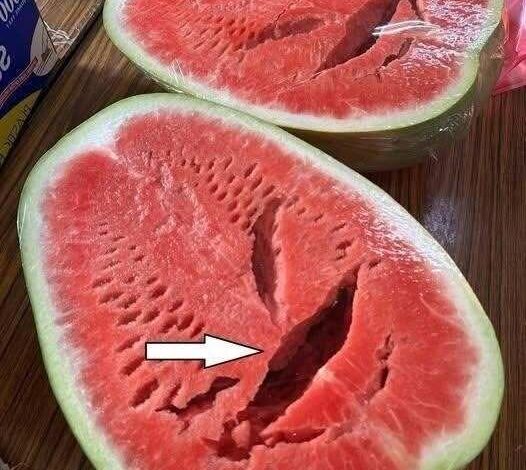
Slicing into a watermelon usually reveals bright, juicy red flesh—but occasionally, the inside can look unusual. Deep cracks, hollow areas, or irregular patterns sometimes surprise shoppers, especially after viral posts suggest these signs may indicate contamination or unsafe chemicals.
Food experts, however, say these internal features are typically the result of natural growing conditions rather than food safety concerns.
One of the most common causes is uneven growth. When watermelons experience periods of drought followed by sudden heavy rainfall or irrigation, the fruit can expand too quickly. This rapid growth may lead to internal splitting or hollow spaces as the flesh develops unevenly.
Temperature fluctuations, ripening patterns, and physical stress during transport can also contribute to changes in texture inside the fruit. While these factors may affect appearance or consistency, they do not automatically make the watermelon unsafe to eat.
Online discussions sometimes mention chlorfenuron, a plant growth regulator used in some agricultural practices to promote cell division and fruit size. When used appropriately under regulated conditions, it is not considered harmful in the amounts typically present in produce. Experts emphasize that unusual internal patterns are far more often linked to natural growth conditions than to chemical misuse.
Overall, while cracked or hollow watermelon flesh may look unusual, it is usually a visual imperfection rather than a sign of danger. Understanding how fruit grows can help separate online misinformation from normal agricultural variation.