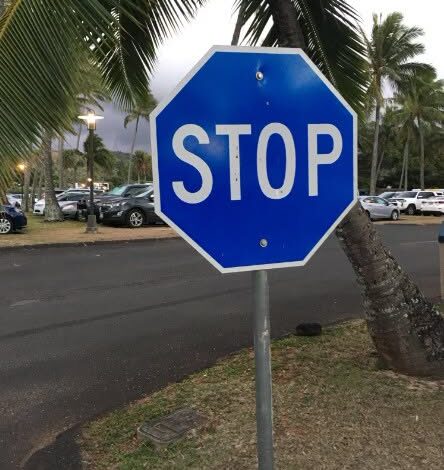
Drivers are often surprised when they encounter a blue stop sign, a rare sight that looks almost identical to the familiar red version found on public roads. While the unusual color may seem like a design choice, it actually signals an important distinction about the sign’s purpose and authority.
In the United States, official stop signs are required to be red with white lettering under federal traffic-control standards. These signs carry legal authority and are enforceable by law on public roads.
Blue stop signs, however, are typically found on private property and do not qualify as official traffic-control devices. Instead, they are commonly installed by businesses, property owners, security teams, and private communities to help manage vehicle and pedestrian traffic in areas such as parking lots, residential developments, industrial facilities, and corporate campuses.
Although a blue stop sign may not carry the same legal status as its red counterpart, safety experts caution against ignoring it. These signs are often placed in locations where visibility, traffic flow, or pedestrian activity creates a heightened risk of accidents.
In the event of a collision, the fact that a sign was located on private property may offer little comfort to those involved. Property rules, insurance considerations, and basic safety responsibilities can still come into play.
The key takeaway for drivers is straightforward: while a blue stop sign may not have the legal authority of an official roadway sign, it is usually installed for a reason. When approaching one, exercising caution and stopping when necessary remains the safest course of action.