
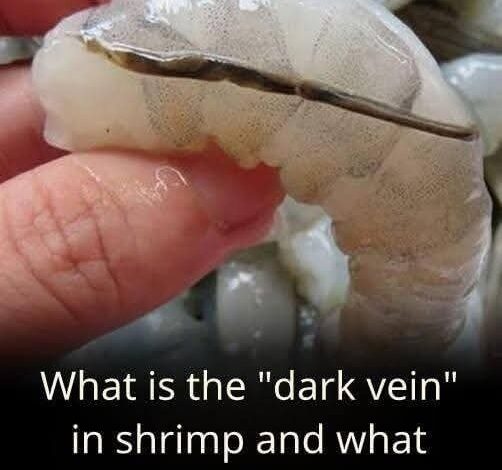
If you’ve ever prepared shrimp at home, you’ve probably noticed the thin dark line running along the back. It’s commonly called the “shrimp vein,” but that name is misleading. It isn’t a vein at all — it’s the shrimp’s digestive tract. This tube runs from head to tail and can contain waste material, which is why it often appears dark or gritty. Understanding what it actually is helps home cooks make smarter choices in the kitchen.
The shrimp’s digestive tract works much like it does in other animals, moving digested food through the body. The black, brown, or sometimes greenish line you see is simply what remains inside. In small shrimp it may be barely noticeable, but in larger shrimp it can be more visible and occasionally gritty. That’s why many recipes suggest deveining — not because it’s unsafe, but because it improves texture and appearance.
From a food safety standpoint, eating shrimp with the tract intact is generally harmless when the shrimp is properly cooked. However, leaving it in can slightly affect flavor and mouthfeel, especially in bigger shrimp where sand or partially digested material may be present. Deveining is mostly about cleanliness and presentation. Many seafood counters sell shrimp already peeled and deveined for convenience.
Ultimately, whether you remove it comes down to preference and the dish you’re making. For shrimp cocktail, pasta, or grilled skewers, deveining is usually worth the quick extra step. For very small shrimp used in soups or finely chopped recipes, many cooks skip it. Knowing the “vein” is really the digestive tract simply takes the mystery out of one of the world’s most popular seafood ingredients.


