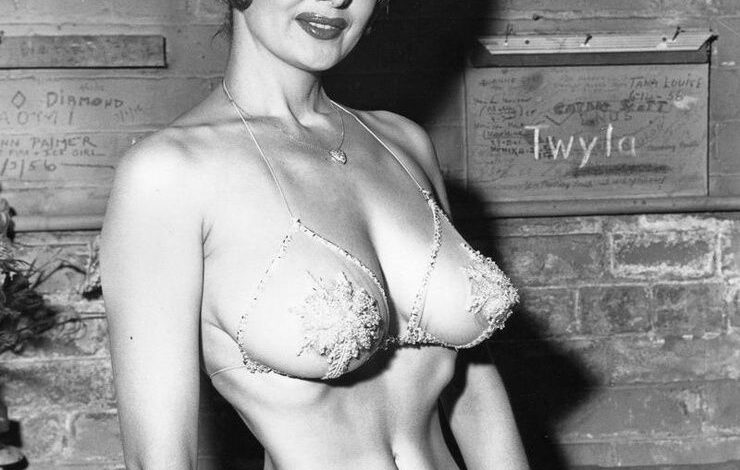
Born Annie Blanche Banks, she would later reinvent herself as Tempest Storm, becoming one of the most recognizable figures in mid-century burlesque. In a performance world that often reduced women to spectacle, she built an act that was also control—carefully crafted stage presence, timing, and persona that allowed her to determine how she was seen and on what terms she revealed herself. Her transformation into Tempest Storm was not just a name change, but a deliberate act of authorship over identity.
Her career unfolded in an era when fame, desire, and power frequently overlapped. She became a fixture of the nightclub circuit and a subject of fascination for celebrities and cultural figures, yet she consistently maintained a reputation for discipline and professionalism. Even as rumors and attention swirled around her, she kept firm control of her image, treating performance as both livelihood and personal boundary.
Her interracial marriage to jazz trumpeter Herb Jeffries reportedly came at a professional cost during a segregated era, reflecting how personal choices were often entangled with public consequence. Still, she continued performing for decades, later influencing modern burlesque performers who viewed her as both pioneer and icon. In that legacy, Tempest Storm is remembered not only for her stage presence, but for the way she turned visibility itself into a form of agency.