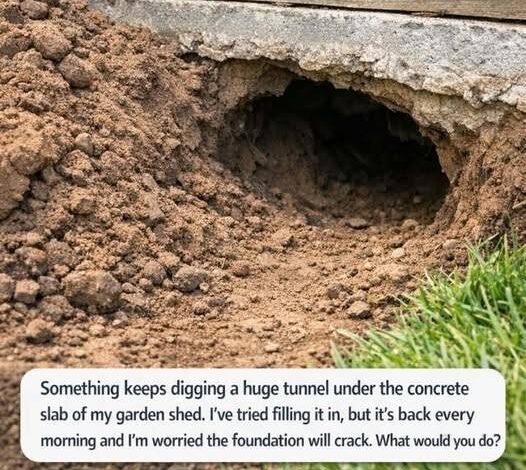
Slide 1 – A Surprising Discovery Under Your Shed
Finding a tunnel beneath your garden shed can come as a shock for many homeowners. What appears to be a small hole in the ground may actually lead to a much larger underground burrow created by wildlife.
Experts say these hidden tunnels can sometimes lead to structural problems if they are left unaddressed. As animals dig and remove soil, the ground beneath a shed can weaken, potentially causing cracks in concrete slabs or uneven foundations over time.
Because of these risks, specialists recommend investigating the cause as soon as possible and taking steps to prevent further digging.
Slide 2 – Step 1: Identify the Animal Responsible
The first step is determining what animal created the tunnel.
Wildlife experts say one of the most common culprits around sheds and outdoor structures is the Groundhog, also known as a Woodchuck. Their burrow entrances are typically between 6 and 12 inches wide and are often surrounded by piles of freshly dug soil.
However, groundhogs are not the only animals that dig beneath buildings. Other possible animals include:
- Skunk
- Raccoon
- Armadillo
If the animal isn’t immediately visible, experts suggest placing a motion-activated trail camera near the entrance to safely identify what’s using the burrow.
Slide 3 – Step 2: Why Animals Dig Beneath Sheds
According to wildlife specialists, sheds can provide nearly perfect conditions for burrowing animals.
The structure offers protection from predators and harsh weather, while the soil beneath the building often stays dry and stable—making it easier to dig and maintain tunnels.
Nearby gardens, lawns, and landscaping can also provide an easy food supply, making the location especially appealing.
Burrows created by a Groundhog can be surprisingly complex, sometimes including multiple chambers used for sleeping, raising young, and storing waste.
Slide 4 – Step 3: Check for Signs of Structural Damage
Even a small tunnel entrance can lead to a much larger network underground.
Groundhog burrows can extend 8 to 60 feet in length and reach depths of up to five feet. As soil is removed, the ground supporting nearby structures may gradually weaken.
Homeowners should watch for warning signs such as:
- Cracks forming in the shed’s concrete base
- Uneven or sloping floors
- Doors that suddenly stick or fail to close properly
- Gaps appearing between the shed foundation and surrounding soil
Spotting these issues early can help prevent more serious structural damage.
Slide 5 – Step 4: Use Temporary Barriers to Slow Digging
Once the tunnel entrance is located, taking quick action can help reduce additional digging while a long-term solution is planned.
Some temporary steps include:
- Placing large rocks or paving stones over the opening
- Covering the hole with heavy-duty wire mesh
- Burying hardware cloth at least 12 inches below ground level
While these methods may not immediately remove the animal, they can discourage further excavation and limit damage.
Slide 6 – Step 5: Encourage the Animal to Leave
Wildlife experts note that burrowing animals typically prefer quiet environments. Making the area less comfortable can sometimes encourage them to move on naturally.
Possible deterrents include:
- Motion-activated sprinklers that startle approaching animals
- Predator-scent repellents
- Wind chimes or vibration stakes placed near the burrow entrance
These methods aim to make the area less attractive without harming the animal.
Slide 7 – Step 6: Live Trapping May Be Necessary
If deterrents fail, experts say live trapping may be required.
Traps designed for medium-sized animals—about 12 × 12 × 32 inches—are commonly used for animals such as the Groundhog. They are typically placed near the burrow entrance and baited with foods like apples, vegetables, or sweet corn.
Before trapping wildlife, however, homeowners are advised to check local regulations, since laws governing animal relocation vary by state.
Wildlife professionals can also assist in safely removing animals and preventing them from returning.