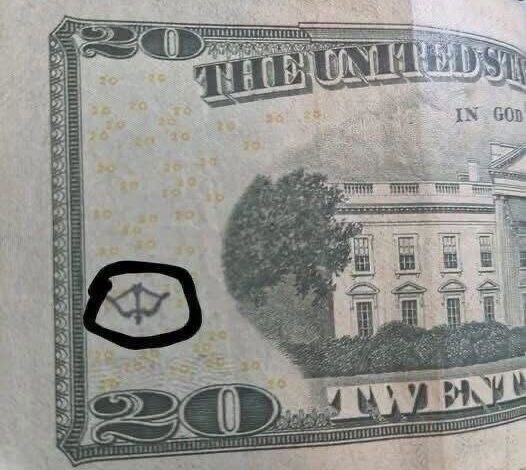
Most people use cash every day without paying much attention to the small details printed on it. But occasionally, a closer look at a bill reveals unusual marks—tiny stamps, symbols, arrows, or initials—that can seem out of place at first glance.
These markings often raise questions, with some assuming they are damage, alterations, or even secret codes. In reality, many of them have historical roots tied to a long-standing practice known as “chop marks,” used in global trade to verify the authenticity of currency.
Before modern banking systems existed, merchants needed ways to confirm that coins and later paper money were genuine. In ancient trading societies, especially across Asia, traders would stamp verified coins with personal symbols after checking their weight and purity. Over time, coins accumulated multiple marks from different merchants, each serving as a sign of trust and authentication.
As paper currency became more widely used, the practice evolved. Traders and money changers began stamping or marking banknotes to indicate they had been inspected and accepted. This became especially common in international trade, where currencies like the U.S. dollar circulated widely across different countries and markets.
Today, these markings are generally harmless and do not affect a bill’s value or legitimacy. Instead, they reflect a historical system of trust built between merchants long before modern financial institutions and anti-counterfeiting technology existed. For collectors and historians, they can even provide clues about a bill’s journey through different regions and hands, turning ordinary currency into a record of global commerce and exchange.